AstronautAtlas
Search the complete archive…
Loading AstronautAtlas records
Program archive
Explorer 1 turned the first successful U.S. satellite launch into a landmark scientific mission and opened a continuing family of space-science investigations.
Explore this program
Choose a path through the Explorer program archive.
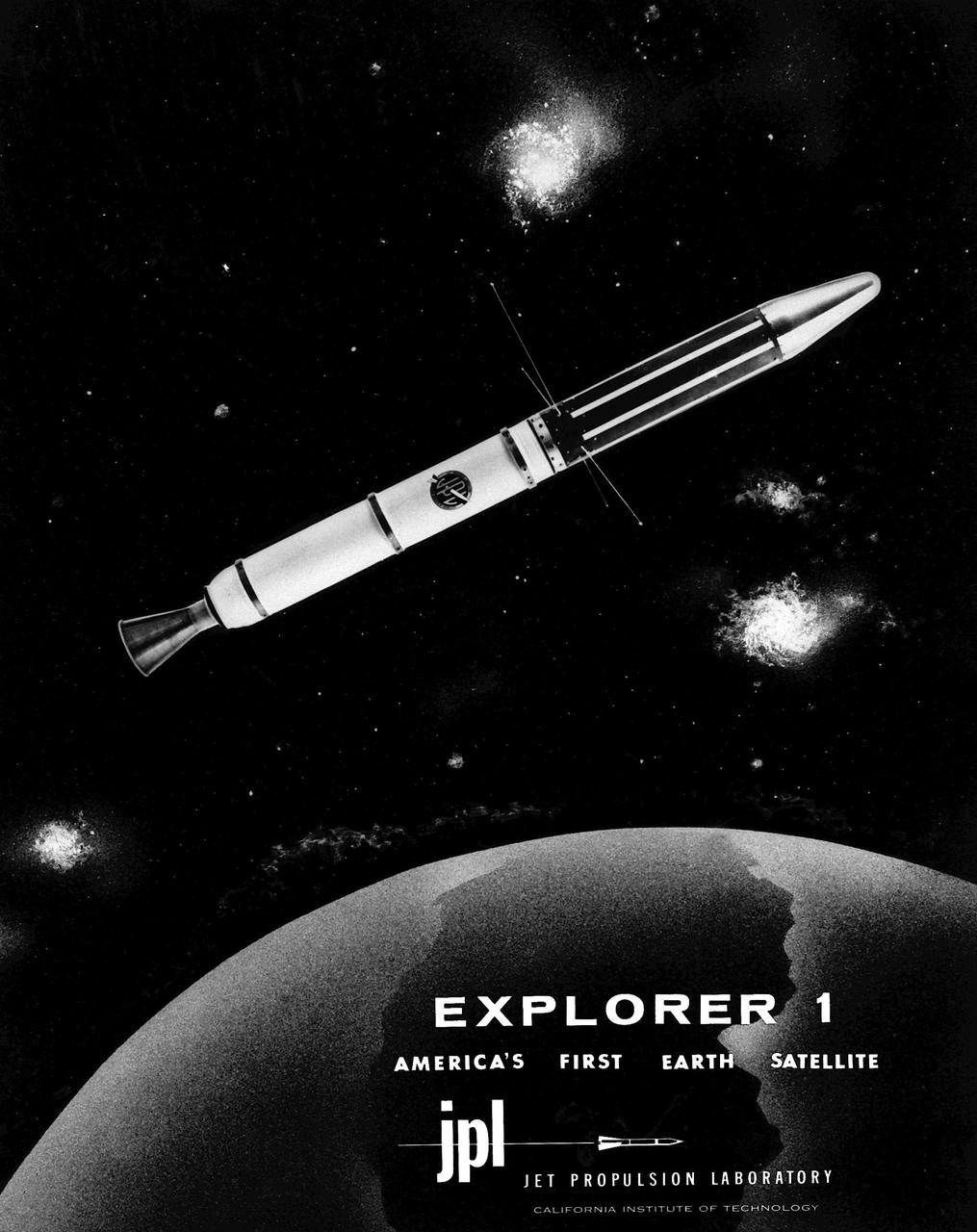
Explorer 1 turned the first successful U.S. satellite launch into a landmark scientific mission and opened a continuing family of space-science investigations.
Core capabilities
Program story
Explorer 1 was developed amid the opening months of the Space Age. The Army Ballistic Missile Agency prepared the modified Jupiter-C launch vehicle, the Jet Propulsion Laboratory built the satellite, and James Van Allen’s University of Iowa team supplied its principal cosmic-ray experiment.
The spacecraft reached orbit on January 31, 1958, becoming the first successful U.S. satellite. Its radiation measurements helped identify the belts of charged particles trapped by Earth’s magnetic field, turning a national launch milestone into a major scientific discovery.
Explorer 1 stopped transmitting in May 1958 but remained in orbit until 1970. Its name continued through a broad family of missions investigating Earth, the Sun, space plasma, astronomy, and the wider space environment.