AstronautAtlas
Search the complete archive…
Loading AstronautAtlas records
Program archive
Sputnik 1, Explorer 1, and Vanguard 1 established artificial Earth orbit, space science, tracking, solar power, and the institutional momentum that created modern space programs.
Explore this program
Choose a path through the Foundational Satellites archive.

Sputnik 1, Explorer 1, and Vanguard 1 established artificial Earth orbit, space science, tracking, solar power, and the institutional momentum that created modern space programs.
Core capabilities
Program story
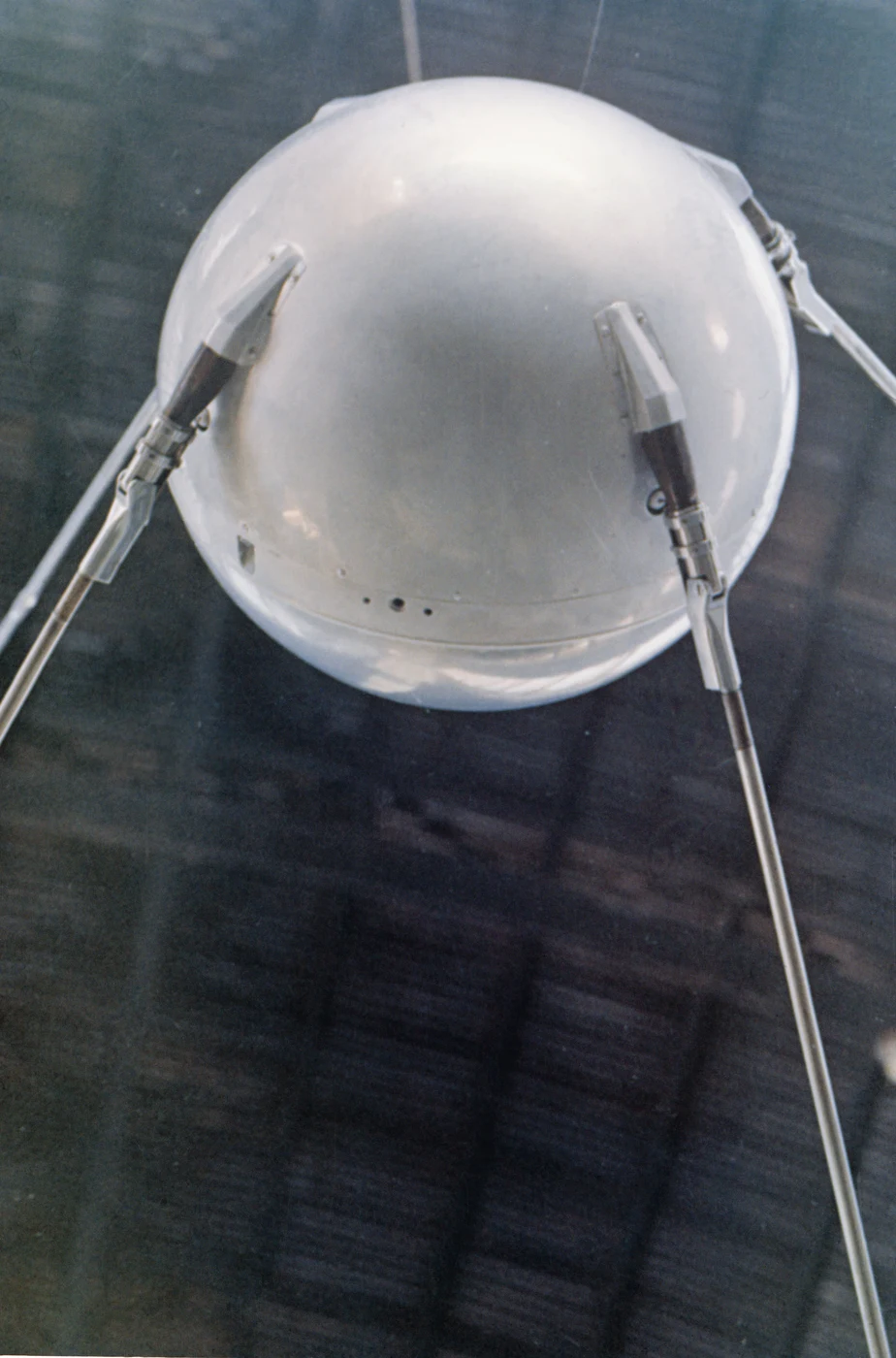
Sputnik 1 launched on October 4, 1957, becoming the first artificial satellite and opening the Space Age. Its radio signal could be heard around the world, while tracking its orbit provided atmospheric information.
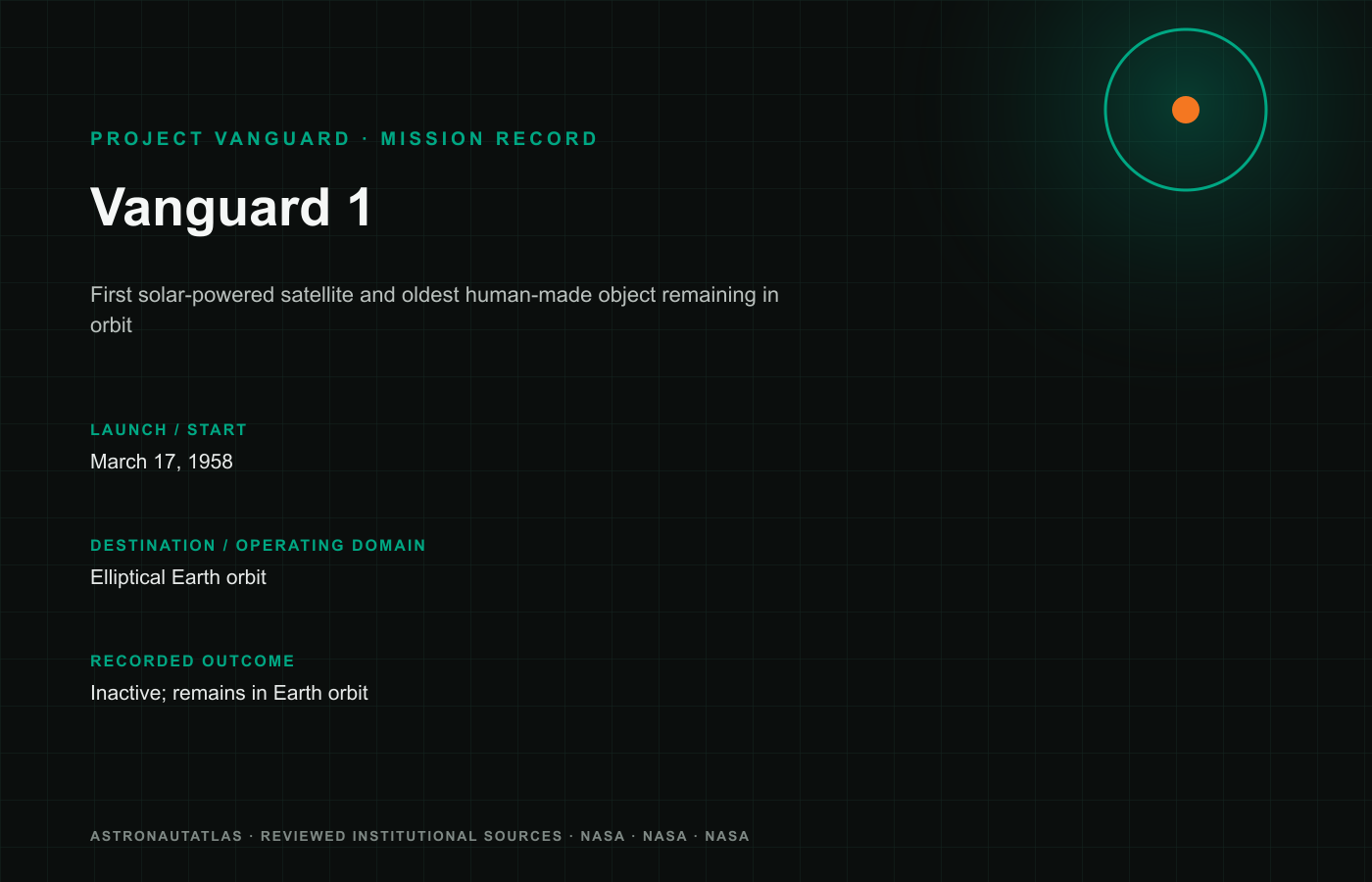
Explorer 1 followed as the first successful United States satellite and discovered the Van Allen radiation belts. Vanguard 1 then demonstrated solar power and remains in orbit decades after its radio transmitters fell silent.
These compact spacecraft produced effects far beyond their size: rapid launch-vehicle development, new scientific disciplines, global tracking networks, and the creation and expansion of national space institutions.